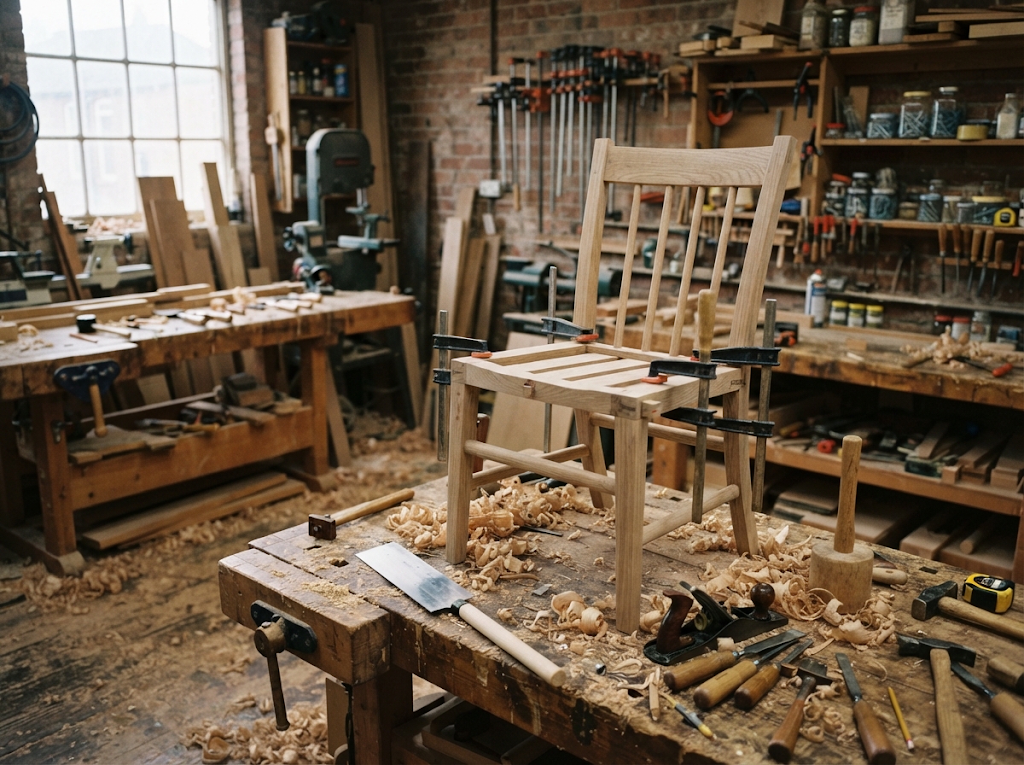
Poland is one of the largest furniture producers in Europe, and many of the sofas, wardrobes and kitchen cabinets in British, American and Scandinavian homes were made in workshops around Zielona Góra, Słupsk and Biała Podlaska. For a family factory that grew from a few carpenters into an exporter, the next challenge is not production but communication. Foreign buyers, retailers and end customers read specifications, assembly guides and warranty terms in English. Furniture is judged twice, once in the showroom and once at the kitchen table with an instruction booklet, and an unclear booklet turns a good product into a returned one. This guide explains how Polish manufacturers and their partners can prepare English materials for export.
The Paper Behind a Piece of Furniture
A single product generates many documents: technical specifications, material declarations, safety test reports, assembly instructions, care guides, warranty cards, packaging labels, catalogues, price lists and product photos with captions. Retail partners add their own requirements, such as product data sheets in a fixed format. Plan the full set when a product is designed, not when the first container is ready.
Specifications Buyers Can Compare
Buyers compare dimensions, weights, materials, finishes and load limits. Use metric units with imperial equivalents for markets that need them, and apply the same terms for every product line. Terms for wood, board, veneer and upholstery have precise meanings, and a careless word such as solid wood for a veneered board can create a legal problem. Check names of materials with the production manager before the text is sent out.
Assembly Instructions That Work
Most complaints about flat-pack furniture come from assembly. Write steps as short commands, one action per step, and illustrate each. Number the parts and match them to a parts list that uses the same names as the drawings. Warnings about tipping, weight and wall fixing should be easy to see. The Polish Committee for Standardization, whose website is pkn.pl, explains the standards that apply to furniture safety and testing.
Choosing Language Support
Factories export to many countries, and each market asks for its own version of the paper. A specialist providing polish to english translation services can handle manuals, catalogues and certificates with a consistent glossary, so that the same screw or panel has the same name everywhere. Share drawings and product photos with the translator, since pictures often explain a term better than a definition.
Labels, Certificates and Compliance
Furniture sold in other countries must meet their rules for fire safety, chemical content, stability and labelling. Test reports and declarations of conformity need accurate wording and, in some cases, official translation. Hold a folder for each market with the current certificates and the date they expire. For other regulatory texts that follow products across borders, see this article on GPSR translation requirements.
Catalogues and Online Shops
Product descriptions should be useful, not poetic. State size, material, colour options, delivery time and care. Give names to colours and finishes that make sense in English, and avoid literal translations of Polish marketing phrases. Photos should show scale, so that a customer can imagine the piece in a room. Keep the online shop, the catalogue and the price list consistent, or customers will notice.
Contracts With Distributors
Export deals involve agency agreements, supply contracts, payment terms and warranty obligations. Terms such as delivery date, defect, return and liability must be clear in both languages. Have lawyers review contracts in the destination country, and agree which language version prevails. Keep copies of signed documents together with the translations.
Shipping and Customs
Transport documents list goods, weights, volumes and values. Errors can cause delays at borders, so prepare standard descriptions in English for each product family. Packaging should carry handling symbols and short texts such as this side up or fragile. Instructions for the receiving warehouse should say how to unload, store and inspect delivery.
Customer Service and Spare Parts
Customers contact the company when a drawer sticks or a screw is missing. Prepare an English help page with photos, a form for ordering spare parts and clear contact hours. Train service staff with short phrases and templates. A friendly, quick reply to a problem builds a loyal customer.
Sustainability and Origin
Many buyers ask where the wood comes from and how it is processed. If you hold certificates for responsible forestry or low emissions, explain them in simple words and attach the documents. Avoid vague claims that cannot be proven. Honest, specific statements are more convincing than slogans.
Keep One Source of Truth
Maintain a product data file with approved names, texts and translations, and update it whenever a product changes. A shared glossary, a version history and a named owner keep catalogues, manuals and websites aligned. When the words match the wood, buyers trust the brand, and a good chair does the rest.
Trade Fairs and Showrooms
Furniture fairs are where many export contracts begin. Prepare bilingual stand materials: a short company profile, product sheets, a price list and a form for collecting contacts. Staff at the stand should know the key terms for materials, delivery and warranty in English, and should be able to explain what makes the workshop different in a few clear sentences.
Returns, Damages and Claims
Damage in transit and missing parts are normal in furniture logistics. Provide an English claims procedure with photo requirements, deadlines and contact details, and train staff to answer politely and precisely. A clear process shortens disputes, protects the brand and keeps retailers willing to reorder.